Over the past year, the enterprise AI conversation shifted from curiosity to execution. What changed wasn't just the technology — it was the mindset. AI agents are no longer a research demo. They book flights, write code, move files, and talk to APIs. They run on your laptop, inside your terminal, across your apps. The question is no longer "can agents do things?" — it's "can you trust what they're doing?"
AI is not going to replace you. But it is going to work for you.
Think of agents as workers on your team. They take instructions, make decisions, use tools, and produce output. Like any worker, they need management. Like any workflow, they need visibility.
The Problem
Today's agents are powerful but opaque. Every agent running on your machine — whether it's writing code, refactoring modules, or debugging tests — is making decisions autonomously. At speed. Across dozens of files.
You see the output. You don't see the journey. The 14 files it read before editing one. The 3 failed attempts before the working fix. The retry loop that burned 50k tokens going nowhere. The moment it decided to rewrite your auth module instead of fixing a typo.
You wouldn't let a contractor refactor your codebase and just accept "it's done" without reviewing what changed. Why accept that from an agent?
That's not a feature gap. That's an audit gap. Developers deploy agents without a standard runtime. Security teams audit without a standard trail. Users interact with agents that have no guardrails. This is the gap we're here to close.
What We're Building
Sarkar AI is three products, designed to work together but useful on their own.
TINY
Trusted Interface for Your agents.
When Claude Code on your Mac wants to run something, it lights up on your phone — the exact command, sealed and signed-for with Face ID. Deny is always one tap. Every agent session becomes a glowing key that shows what it's doing right now: thinking, working, done, or needs you.
On your Wi-Fi, end-to-end encrypted and pinned at pairing — no account, no cloud. Works with Claude Code today (Gemini in beta; Codex and Kiro on the roadmap), across several Macs at once. The trust core is open source (MIT): don't trust us, read it.
Deskmate
Stay in build mode, even when you're away from your laptop.
Built out of curiosity. Motivated by laziness — and laziness is usually just leverage in disguise. Deskmate is a local AI execution agent. Message it from Telegram or WhatsApp and it acts on your machine. Run a Docker build while grabbing coffee. Trigger tests from bed. Send VPN-only emails remotely. No commands to memorize, no context switching, no broken flow. Just intent.
Pluggable agent backends (Claude, Codex, Gemini, OpenCode), persistent memory, approval-based safety layer, MCP protocol support, cron scheduling. Everything runs locally; nothing leaves your machine unless you say so.
npm install -g @sarkar-ai/deskmate
Riva
AI agents are tools. And tools need logs.
If you cannot see what an agent is doing, you cannot trust it. Riva gives you monitoring, token analytics, security auditing, and forensic replay for 13 agent frameworks — Claude Code, Codex, Gemini, LangGraph, CrewAI, AutoGen, and more. CLI, web dashboard, system tray, or OpenTelemetry export.
Forensics isn't logging. Logging tells you what happened. Forensics tells you why it went wrong. Full timelines, pattern detection, decision-point extraction, and efficiency metrics that turn "I think the agent worked" into "here's exactly what it did, in 47 turns, across 12 files, with 94% efficiency."
pip install riva
Why Now
2026 is the year AI infrastructure became strategy. The agent ecosystem is moving fast — and the tooling hasn't caught up. Execution is scattered, observability is non-existent, and trust is assumed. Agents are forcing organizations to rethink how AI actually operates inside the enterprise.
Stability and security don't come from hoping agents behave. They come from watching them. Observability removes chaos. It replaces the unknown with evidence.
That's what Sarkar AI is here to build. Open source where it matters. Opinionated where it counts.
— , thinking...
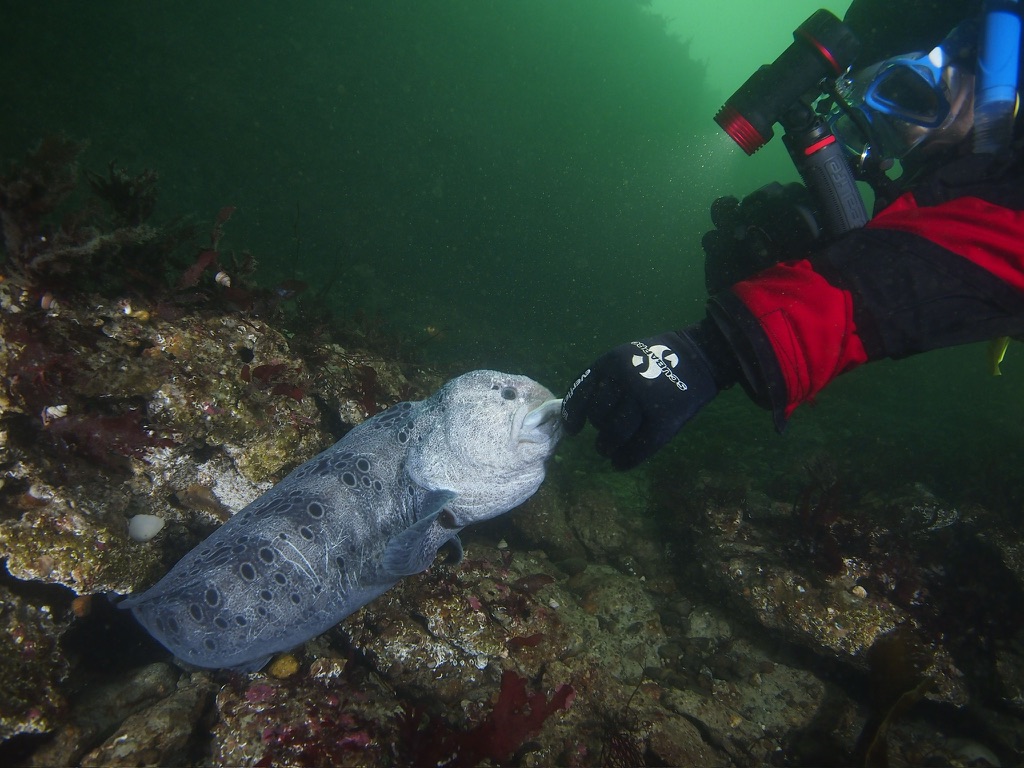
When not building infrastructure for agents, usually found underwater.